Training a new sewing machine operator in two weeks
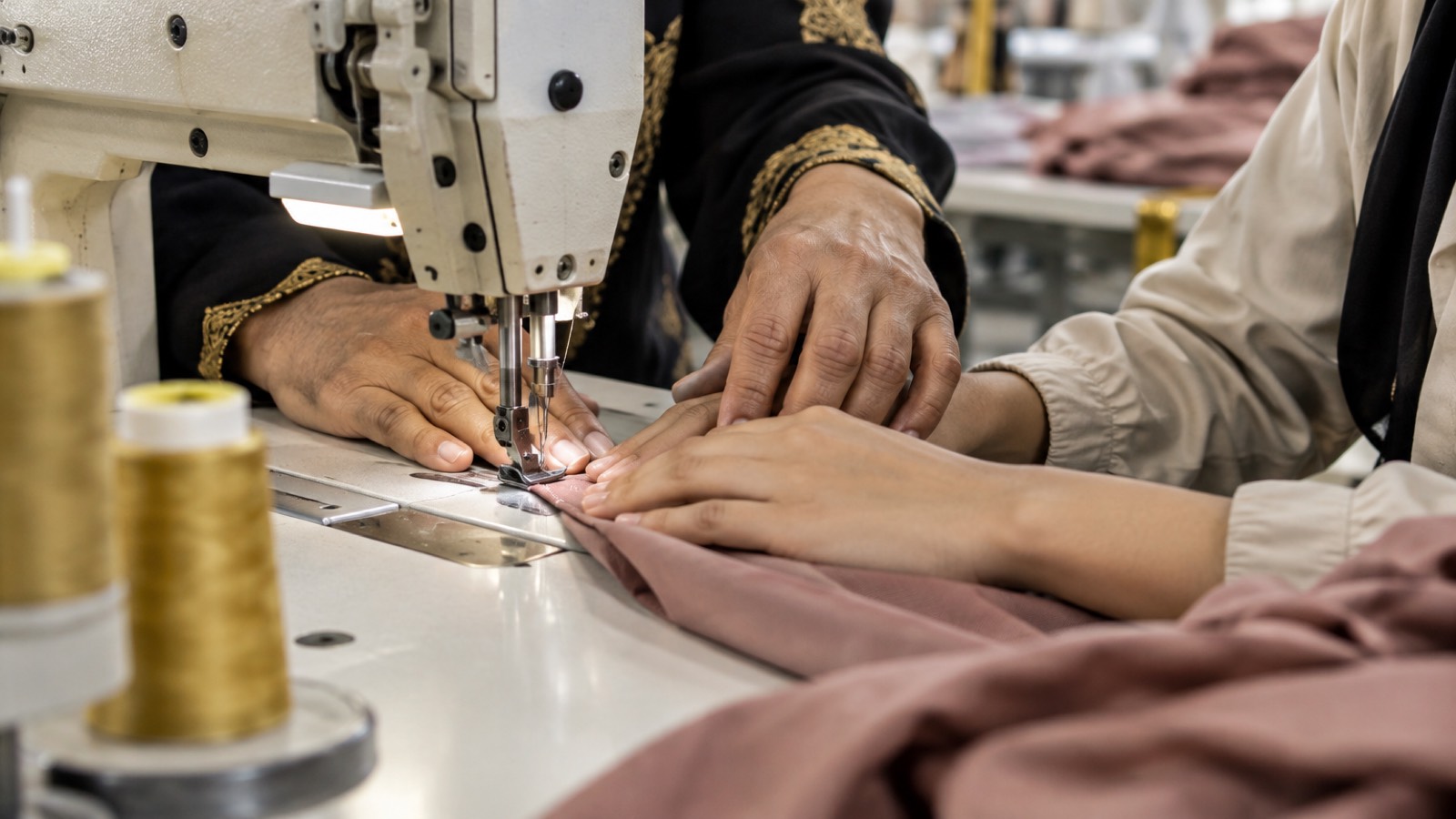
Most new operators in Egyptian garment factories learn the same way: they are seated next to an experienced worker who is busy hitting their own target, and told to watch and copy. It costs nothing up front, which is why it persists. The hidden costs come later: bad habits copied along with good ones, damaged pieces, and a high number of trainees who give up in the first few weeks because nobody told them whether they were improving.
A short, structured plan fixes most of this. Two weeks is not enough to make anyone a master machinist, but it is enough to take a person with basic sewing experience to a useful, measurable pace on one operation. Here is a plan that works on most floors.
Before day one: prepare three things
- A training machine. Ideally a working machine that is not on a critical operation, often an older one that has been retired from the line. The article on the machine lifecycle explains why redeploying old machines this way makes sense.
- One target operation. Pick a simple, high-volume operation from the current style, such as side seams, hemming or attaching care labels. Do not try to teach three operations at once.
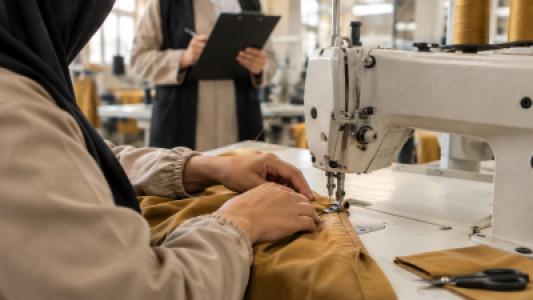
- A trainer with time. A senior operator or line supervisor who is given time off target to train. If the trainer loses earnings by training, the training will be rushed.
Week one: from safety to a real operation
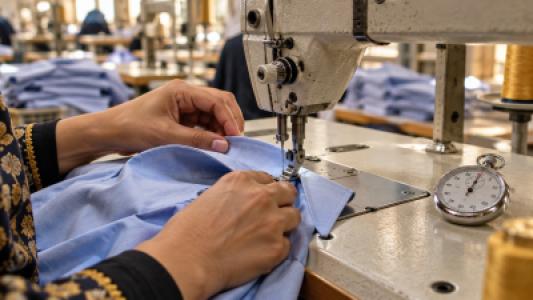
Days 1 to 3: the machine itself. Machine safety first: finger guards, needle changes with the motor off, posture and foot control. Then threading, bobbin winding, tension adjustment and straight seams on scrap fabric. By the end of day three, the trainee should be able to thread the machine and sew a straight seam at a consistent seam allowance without help.
Days 4 to 7: one real operation. Move to the target operation using real cut pieces, ideally rejected or spare pieces from the cutting room. The trainer demonstrates the correct method once, with emphasis on how pieces are picked up, aligned and set aside, since handling is where most time is lost. Set a training target of about 50 percent of the operation's standard pace, based on its SMV. If your SMVs are not yet set, see how to calculate SMV and line efficiency.
Week two: on the live line
In week two, the trainee joins the live line on the same operation, placed next to the trainer rather than in a bottleneck position. The target rises gradually:
| Day | Target (% of standard pace) | Quality check |
|---|---|---|
| 8 | 55% | Every piece checked by trainer |
| 9 | 60% | Every piece checked |
| 10 | 65% | Every second piece checked |
| 11 | 70% | Sample of 20 per hour |
| 12–14 | 75–80% | Normal inline checks |
For an operation with an SMV of 0.5 minutes, the full standard pace is 120 pieces per hour, so 70 percent means about 84 pieces per hour. That is a realistic two-week result for a trainee with some prior sewing experience. Complete beginners may need closer to four weeks to reach the same level.
Measure every day and show the trainee
The most important habit in the whole plan is simple: write the target down, measure the result every day, and show it to the trainee. Count completed pieces per hour at two fixed times, and count rejects.
A trainee who sees their own line climb from 40 to 60 to 75 percent has a reason to stay. One who only hears that they are "still slow" does not. Keep the conversation one to one, compare the trainee with their own previous days, never with the line's fastest operator, and always mention one thing that improved. The broader principles are in measuring operator performance without demotivating your team.
Common mistakes
- Training on a bottleneck operation. A trainee at 50 percent pace on the line's slowest operation starves everyone after them. Train on operations with spare capacity.
- Ignoring quality while chasing speed. Speed built on poor technique hits a ceiling. Insist on correct handling first; speed follows.
- Changing operations too early. Move the trainee to a second operation only after they hold 80 percent on the first for several days.
- Blaming the trainee for machine problems. A badly set training machine teaches frustration. Have the mechanic check it before day one.
- No plan for pay. If the factory uses piece rates, agree in advance what the trainee is paid during these two weeks. See piece-rate pay vs fixed salary for options.
Where training fits in your hiring
A reliable two-week plan changes how you hire. If you can bring a semi-skilled worker to a useful pace in two weeks, you no longer need to compete only for fully experienced operators, who are the scarcest and most expensive people in the labour market. You can hire for attitude, reliability and location, then train for speed.
Nasij supports the first part of that process: factories can publish hiring requests by trade, specialty, shift, location and salary range, and receive worker applications that state each applicant's trade and years of experience, so you can tell quickly who is ready for the line and who is a good candidate for training. On the floor, production is recorded by stage as work moves, which gives supervisors real quantities rather than guesses when they review how a newly staffed line is progressing. For more on building the pipeline, read hiring skilled workers for garment factories in Egypt.