Tracking work in progress between production stages
Every garment factory has work in progress (WIP): fabric that has been cut but not sewn, garments sewn but not finished, pieces finished but not packed. Some WIP is necessary. A sewing line with no cut panels waiting in front of it will stop, and a finishing table with nothing to check is wasted capacity.
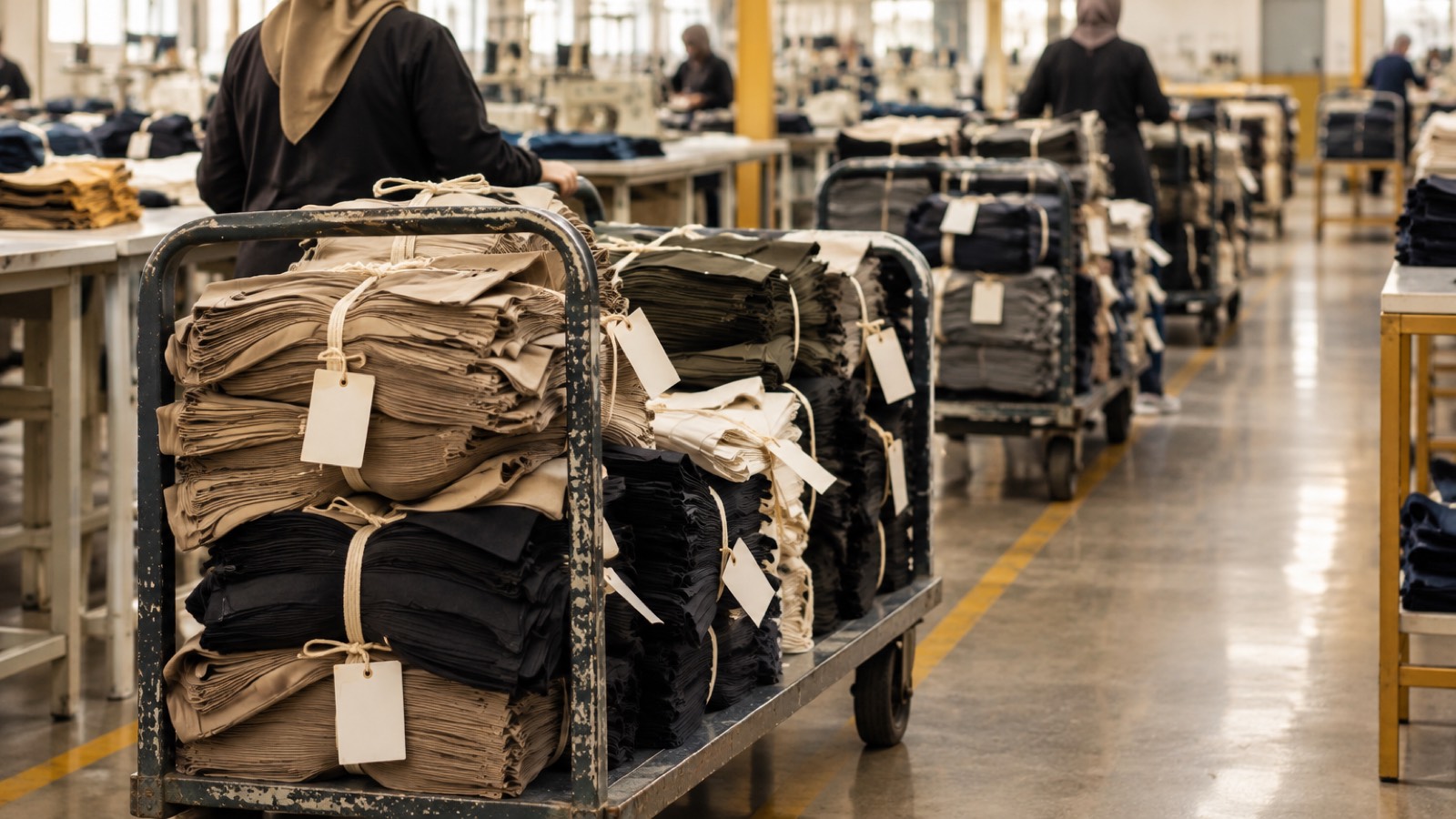
The problem starts when WIP grows without anyone noticing. Bundles pile up in corridors, under tables and in side rooms. Each one represents fabric, trims and labour you have already paid for and cannot invoice yet. In many factories WIP quietly holds several days of output, which means several days of cash locked on the floor and several days of delay for every new order.
Why WIP matters more than it looks
- Cash. A factory producing 3,000 pieces a day at a material and labour cost of 60 EGP per piece holds 180,000 EGP of value for every day of WIP. Five days of WIP is 900,000 EGP sitting on the floor.
- Lead time. A new order cannot leave the factory faster than the queue in front of it. High WIP means long and unpredictable delivery times.
- Hidden quality problems. A defect in cutting may not be discovered until the bundle is sewn. The more WIP between stages, the more pieces are affected before anyone notices.
- Loss and damage. Bundles that wait for weeks get soiled, creased, mixed up or simply lost.
Three questions every WIP report must answer
A useful WIP view is not just a total. It answers three questions for each stage and each order:
- Where is it? How many pieces of each order are currently at cutting, sewing, finishing, pressing and packing.
- How old is it? When the oldest open quantity entered that stage. A balance of 2,000 pieces received this morning is healthy; the same balance received ten days ago is a problem.
- Why is it stuck? Is the stage overloaded, is it waiting for trims, is a machine down, or did a quality issue stop the order?
The first question tells you where your bottleneck is, a topic we explore in the bottleneck is rarely where you think. The second question is about order of processing; when old pieces stay behind while new ones move ahead, you have a FIFO problem, as explained in why FIFO matters more than you think.
Building a stage balance you can trust
WIP is calculated, not counted. At each stage the live balance is:
Stage balance = pieces received − pieces passed to the next stage − pieces recorded as lost or rejected
For that formula to work, three rules must be followed every day:
- Every handover between stages is recorded, with the order, the quantity and the date.
- Rejects, damaged pieces and missing pieces are recorded at the stage where they were found.
- No pieces move "informally". A bundle borrowed from one order to complete another must be recorded as a movement, or both balances become wrong.
A monthly physical count is still useful as a check. If the count and the calculated balance differ by more than 1–2%, look for unrecorded handovers or losses rather than adjusting the numbers.
Reading WIP: an example
A factory has an order of 8,000 jeans. On day nine the stage balances look like this:
| Stage | Balance | Oldest open since | Comment |
|---|---|---|---|
| Cutting | 1,200 | Day 7 | Normal buffer |
| Sewing | 900 | Day 8 | Moving well |
| Washing (subcontractor) | 2,600 | Day 3 | Six days old |
| Finishing | 150 | Day 9 | Starving |
| Packing | 80 | Day 9 | Starving |
The total WIP of about 4,900 pieces is not alarming on its own. The age is. Washing has held some pieces for six days, while finishing and packing are almost idle. The conversation with the laundry needs to happen today, not when the shipment is already late.
Practical habits that keep WIP under control
- Set a WIP limit per stage. For example, no more than one and a half days of the next stage's capacity waiting in front of it. Stop cutting ahead when the limit is reached.
- Review ageing every morning. Five minutes in the production meeting on any balance older than three days.
- Treat subcontractors as stages. Record what goes out and comes back from printing, embroidery or washing exactly like an internal stage.
- Put WIP on the owner's dashboard. It belongs among the 7 daily numbers every factory owner should see.
Many factories try to do this in Excel and give up when the sheet grows to dozens of tabs and nobody trusts the totals. If that sounds familiar, our article on moving from Excel to factory management software may help you decide when to switch.
How Nasij tracks WIP
Nasij tracks production by stage with live balances. Each handover is recorded as a movement into the next stage, losses are recorded where they occur, and each stage shows its current balance per order, together with the dated receipts behind it. With FIFO enforcement switched on, older receipts are consumed first, so the oldest open quantity at each stage is always clear. The result is a WIP view that answers where and how old, so the question of why can be asked the same morning instead of at shipment time.