The bottleneck is rarely where you think — instrumenting your stages
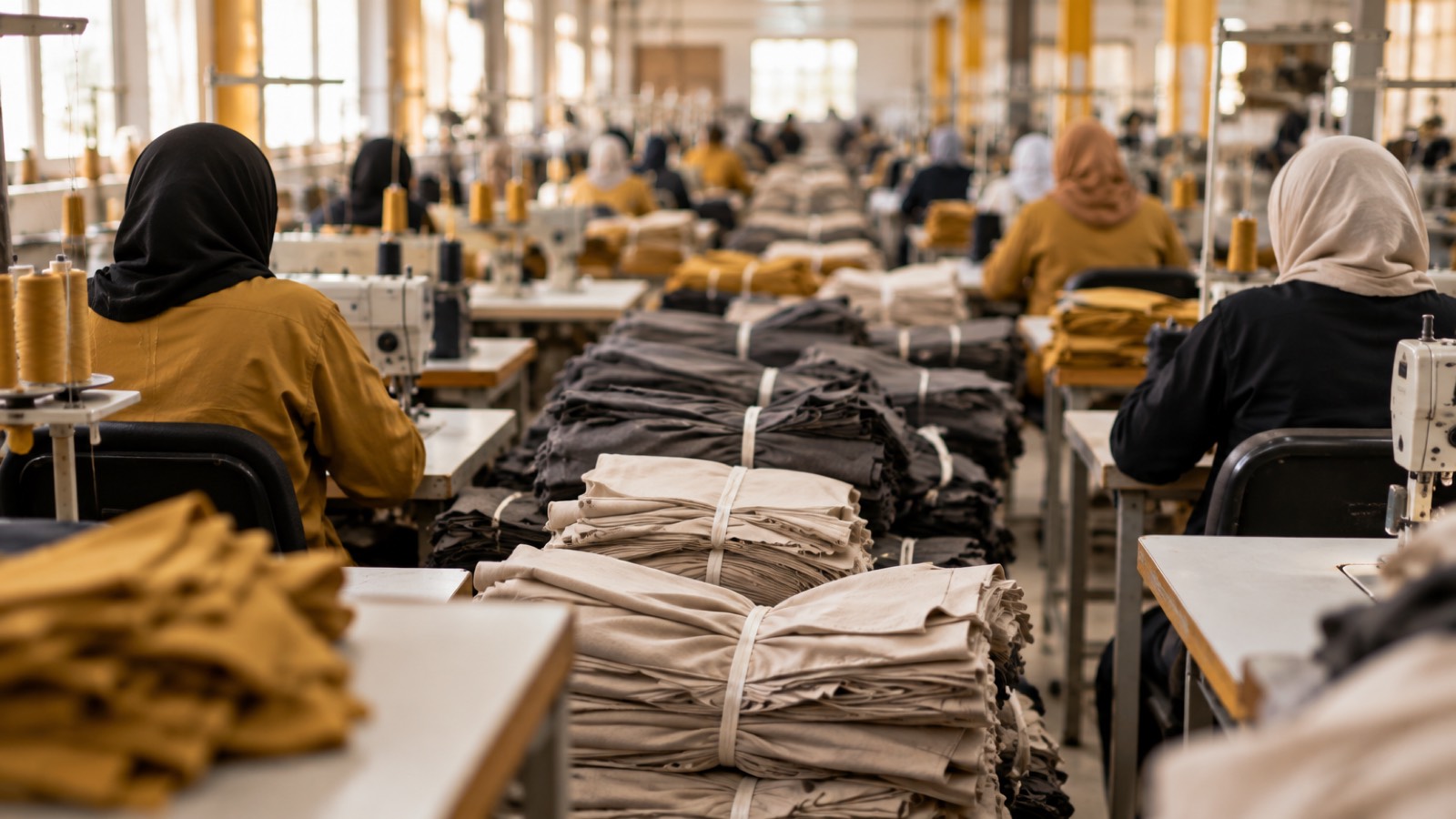
When a shipment is late in a garment factory, the sewing hall almost always takes the blame. It has the most people, the most machines and the most visible activity, so it is natural to assume it is the slowest part of the chain. Owners respond by adding operators, approving overtime or buying more machines for the sewing lines.
Sometimes that is the right answer. Often it is not. In many factories the real constraint sits upstream in cutting, downstream in finishing or pressing, or at an invisible handover such as embroidery or printing sent to a subcontractor. Spending money on the wrong stage does not move the shipment date; it only moves the pile of waiting pieces somewhere else.
What a bottleneck actually is
A bottleneck is the stage that limits the output of the whole chain. Its defining sign is simple: work piles up in front of it, and the stages after it wait for work. If sewing produces 2,500 pieces a day but finishing can only check, trim and press 1,800, the factory ships 1,800 a day no matter how hard sewing works. The extra 700 pieces become work in progress waiting in front of finishing.
That is why the most reliable way to find a bottleneck is not to watch people work, but to watch where pieces accumulate. Activity can be misleading; balances are not.
Why intuition gets it wrong
- Sewing is visible, finishing is not. A crowded sewing hall looks busy; a small finishing team behind a curtain does not draw attention, even if it is the real limit.
- Bottlenecks move. On a basic T-shirt the constraint may be sewing. On a style with heavy embroidery or many buttons, it moves to embroidery or buttonholing.
- Subcontracted stages are blind spots. Printing or washing sent outside the factory often has no daily count at all, so delays there are discovered only when the goods are already late.
- Reports show output, not queues. A daily output report tells you what each stage finished, but not what is waiting in front of it, which is exactly what reveals the constraint.
Instrumenting your stages
To see the bottleneck you need a live balance at each stage: pieces received minus pieces passed on, minus any recorded losses. You can build this with a few simple rules:
- Define your stages clearly. For most factories: cutting, sewing, finishing (trimming and checking), pressing, packing. Add embroidery, printing or washing if they exist, even when subcontracted.
- Record every handover. Each time a bundle moves from one stage to the next, record the quantity. Counting once per handover is enough; you do not need operator-level data to find a bottleneck.
- Record losses where they happen. Rejects and damaged pieces must be recorded at the stage that found them, or the balance will drift.
- Look at the balances daily. The stage with a growing balance is your constraint. The stage after it with a shrinking or zero balance is starving.
Our article on tracking work in progress between production stages goes further into ageing and how long pieces have been waiting.
Reading the numbers: an example
Here is a snapshot from a factory producing 15,000 children's dresses, taken at the end of day four:
| Stage | Received | Passed on | Live balance |
|---|---|---|---|
| Cutting | 15,000 | 9,600 | 5,400 |
| Sewing | 9,600 | 8,900 | 700 |
| Finishing | 8,900 | 5,200 | 3,700 |
| Pressing | 5,200 | 5,000 | 200 |
| Packing | 5,000 | 4,950 | 50 |
Cutting's balance is planned stock waiting to be sewn, which is normal. Sewing holds only 700 pieces, less than half a day of work. The real pile is in finishing: 3,700 pieces, nearly three days of its capacity. Adding sewing operators here would make the finishing queue longer. The right move is to strengthen finishing: an extra checking table, moving two helpers from packing, or a second shift for trimming.
Fixing the constraint once you find it
Once the bottleneck is visible, the options are usually cheaper than expected:
- Make sure the constraint never waits: feed it first, protect its breaks, and do not let it run out of trims or thread.
- Move simple operations away from it, for example thread trimming done at the end of the sewing line instead of in finishing.
- Balance capacity using standard minutes, as described in how to calculate SMV and line efficiency.
- Catch defects earlier so the constraint does not waste time on pieces that will be rejected. Our comparison of inline quality control vs final inspection explains why.
Then watch the balances again. When one constraint is fixed, another stage becomes the limit, and the cycle continues. Stage balances belong among the daily numbers every factory owner should see.
How Nasij makes stage balances visible
Nasij tracks production by stage with live balances. Every handover between stages is recorded as a movement, losses are recorded where they happen, and each stage shows how many pieces it currently holds for each order. Managers can see at a glance where pieces are accumulating, which turns the question "where is the bottleneck?" from a debate into a reading.